

Lupe

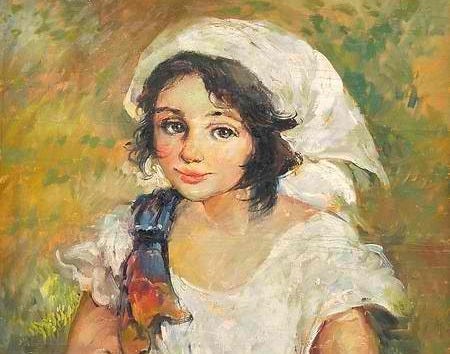
When Lupe was in her teens, her father took her up a mountain in Sorsogon, carrying only a few belongings. The war had reached their doorstep. The Japanese were taking over, trying to claim the Philippines from the Americans, who had just won it back from Spain after three hundred years of rule. It was chaos: bloodshed everywhere, families torn apart, unspeakable atrocities happening to innocent people.
Lupe’s father had heard the stories. The Japanese were abducting women, and Lupe, pale-skinned and mestiza, was exactly the type they were looking for because of all that her beauty represented: Westerners, foes.
He couldn’t risk it.
So he took her to a friend, a man who lived high up in the mountains, far from the war below.
“He’ll take care of you like you’re his own daughter,” her father said before leaving.
Except he didn’t.
What Lupe’s father didn’t know was that behind closed doors, this man wasn’t kind. He didn’t care about friendship or promises. The moment Lupe was left in his care, he decided she would be his wife.
Lupe had grown up living a simple, quiet life, sewing clothes for herself and her dolls. But in that hut, she became something else: a servant, a prisoner.
Her soft hands became rough with calluses from chopping wood, blistered from endless laundry. Her skin, once soft and smooth, cracked under the sun as she cooked and worked the fields from sunrise to sunset. Most horrible of all, she had a husband she never wanted—a man who treated her like something he owned.
For years, she lived like that. Until one night, she decided she couldn’t do it anymore.
She waited until he was deep asleep, passed out from drinking, then slipped out the door with nothing but the clothes on her back.
Then, she ran.
Ran and ran as fast as she could.
It was pitch dark. The mountain was unforgiving; rocks were tearing at her feet, branches scratched her arms, shadows shifted in the trees. Every sound made her heart pound. Every step felt like it could be her last. She didn’t know if she’d make it. She only knew she had to try.
I’ve always wondered about that night, about how terrifying that hut must have been for Lupe to choose a dark jungle and the war over it. But I’m glad she ran for her life. Because if she hadn’t, three generations of our family wouldn’t be here.
Lupe is my grandmother, you see. And this is her story.

After many hours of running, Lupe finally reached the bottom of the mountain. The sky was still dark, the deep purple-blue of a fresh bruise. She knew that the man in the hut would never come looking for her, for he was a coward among other men. But she also knew that out here, in the open, she wasn’t safe either.
Still, she kept walking.
She was weak, dehydrated, barely holding on, when she saw the glow of an eatery down the street. A soldier stood outside, watching her. She froze. She didn’t know if he was a friend or an enemy. Then she saw his uniform: Philippine military. And his skin: brown.
Maybe she was safe, she hoped. She only wanted water. Just one sip.
As she entered the establishment, the smell of food hit her nostrils immediately, warm and rich. It made her stomach twist with hunger. Behind the counter, a middle-aged man and woman eyed her curiously. The soldier from outside followed her in and stood beside her.
This is it, she braced herself. He’s going to tell me to leave.
But he didn’t.
Instead, he asked, “What would you like to order?”
That’s how she learned his name: Dominador.
“But you can call me Ador,” he added.
“Guadalupe,” she replied. “You can call me Lupe.”
She also learned that this was his family’s eatery, and the two behind the counter were his parents. Lupe only asked for a glass of water. But Ador brought her a plate of pansit, too.
“On the house,” he said. “But you have to tell me your story. It looks like you have one.”
Maybe it was the warmth in his voice. Maybe it was the kindness she hadn’t felt in years. Maybe it was just the fact that, for the first time in what seemed like forever, someone actually treated her like a person. Whatever it was, she told him everything.
By the time the plate of pansit was wiped clean, Ador had already made up his mind. He turned to his parents and asked them to give Lupe a job at the eatery, to help her save money and start over. Plus, they had a spare bedroom that no one was using.
His parents hesitated but eventually agreed. A bus ticket wasn’t that expensive anyway. She wouldn’t need to stay long.
Two years later though, when Lupe finally left, she didn’t leave alone. She bought bus tickets for three. Because Ador, my grandfather, was right there beside her, and so was their firstborn child, my mom Arlene.
What happened was, Lupe and Ador quickly became friends after that first meeting. Somewhere along the way, they fell in love and got married. They built a life together, far from the mountains Lupe had escaped. Then, they had two more children.
Lupe once again found herself living a quiet and simple life, sewing clothes for her children and their dolls—and then for her grandchildren and their dolls. During siesta, I remember vividly, Grandma enjoyed coffee and biscuits while listening to Doris Day’s Que Sera, Sera.
Many decades later, when Grandpa was in his eighties, near the end of his life, he started waking up in the middle of the night, claiming to see the Grim Reaper standing at the foot of his bed. He was terrified, restless, afraid to close his eyes. But then Grandma passed away first. And just like that, he stopped seeing the Reaper.
Instead, he started seeing her.
When Grandpa closed his eyes for the last time, it wasn’t fear that met him; it was his wife. It was his Lupe.

This is singlehandedly the best Filipino post I’ve read in Substack. Endless blessings to you and yours, po.
Perfect 🤌